ANSI/IEC Device Number Reference
Interactive periodic-table-style grid of ANSI/IEEE device numbers. Click any function for the IEC equivalent, typical application, pickup range, and linked tool.
Delgado Relay Protection Reference
Practical learning modules, interactive tools, and guided visualizers for protection engineers. Filter by topic or browse the full catalog.
Select by topic, difficulty, or skill you want to build next.
Interactive periodic-table-style grid of ANSI/IEEE device numbers. Click any function for the IEC equivalent, typical application, pickup range, and linked tool.
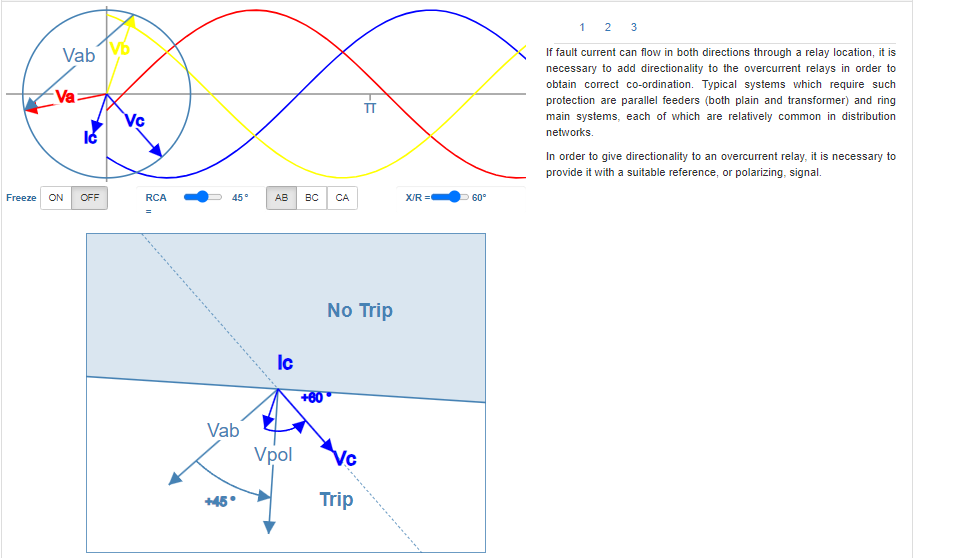
Understand directional decision principles using voltage, current, and reference angle relationships.
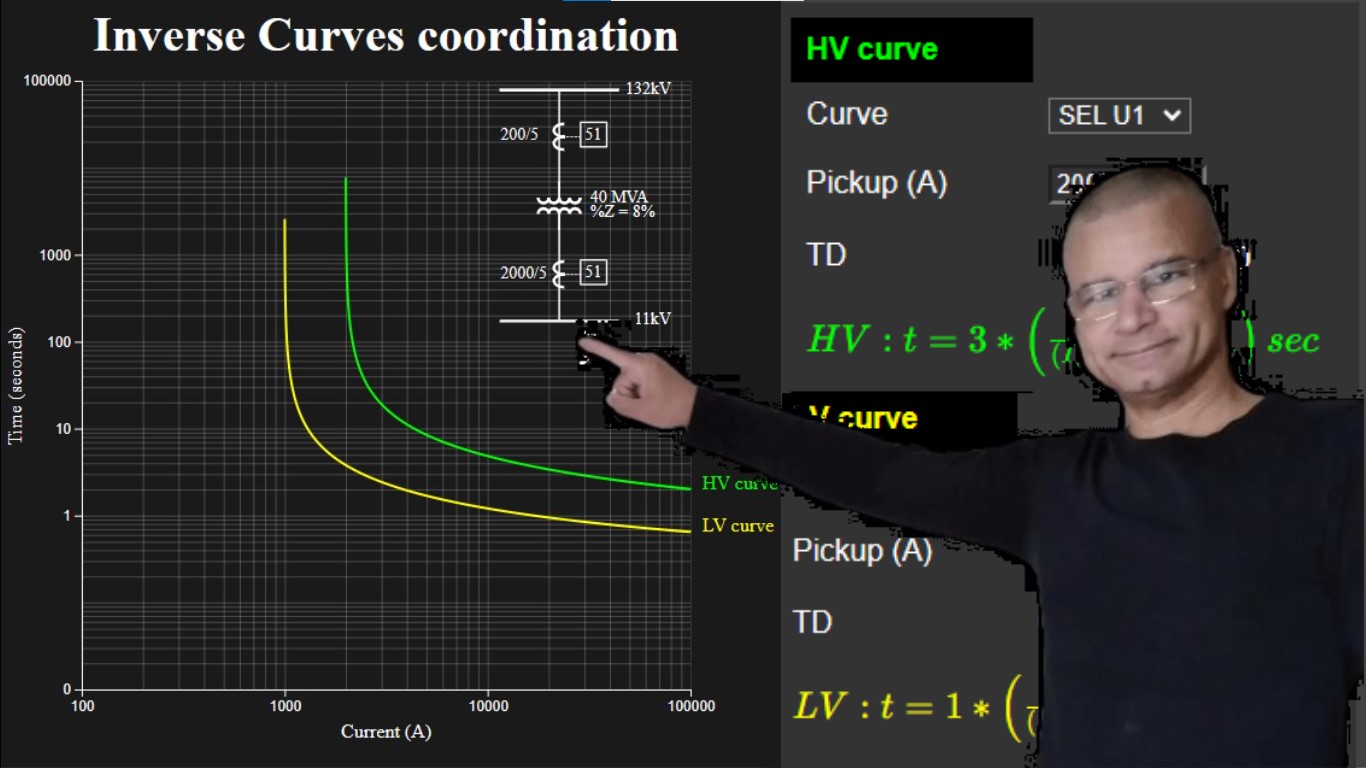
Visualize relay coordination curves for step-down transformer studies and setting checks. Compare relay curves against coordination margins and transformer damage limits.
Explore distance protection zones and reach behavior with an interactive impedance-plane view. Inspect zone reach and apparent impedance movement on the R-X plane.
Explore manual relay testing logic with a compact widget designed for practical check routines. Rehearse test-point reasoning before bench or field verification.
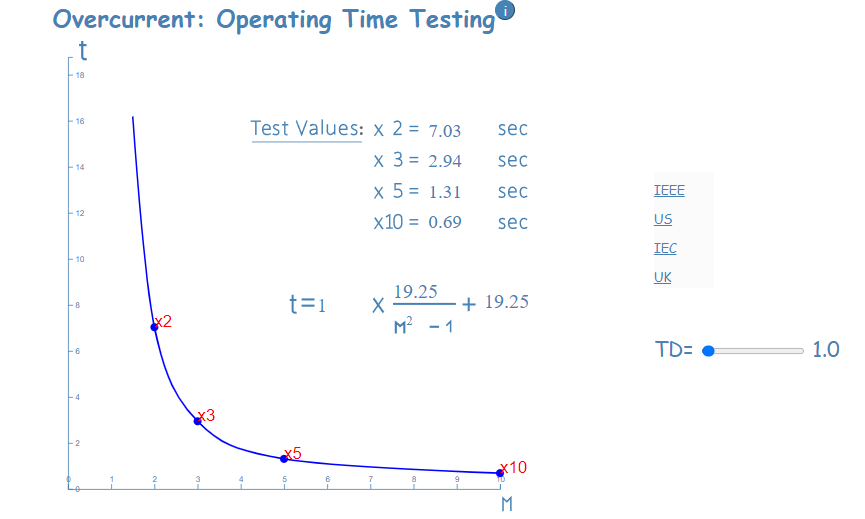
Compare overcurrent relay operating times across standard inverse curve selections. Estimate pickup and operating time behavior before testing or maintenance.
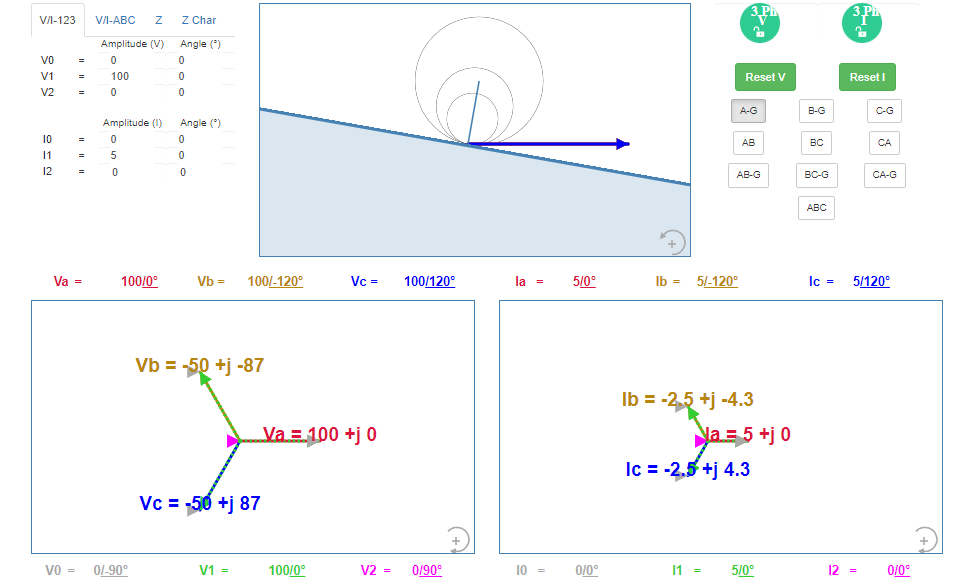
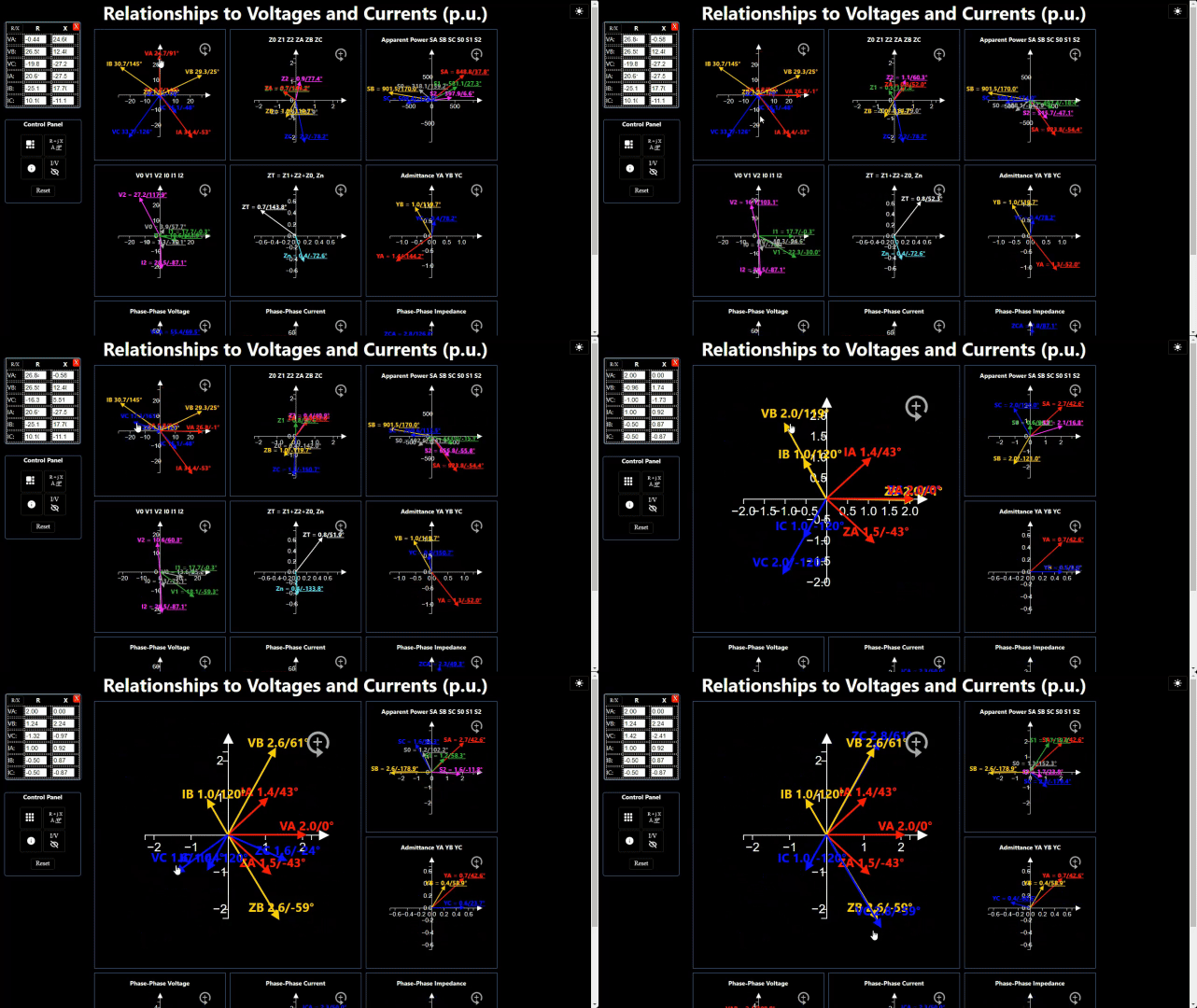
Manipulate voltage and current phasors to understand relay measurement relationships in real time. Interpret phase angle shifts and phasor relationships used in protection work.
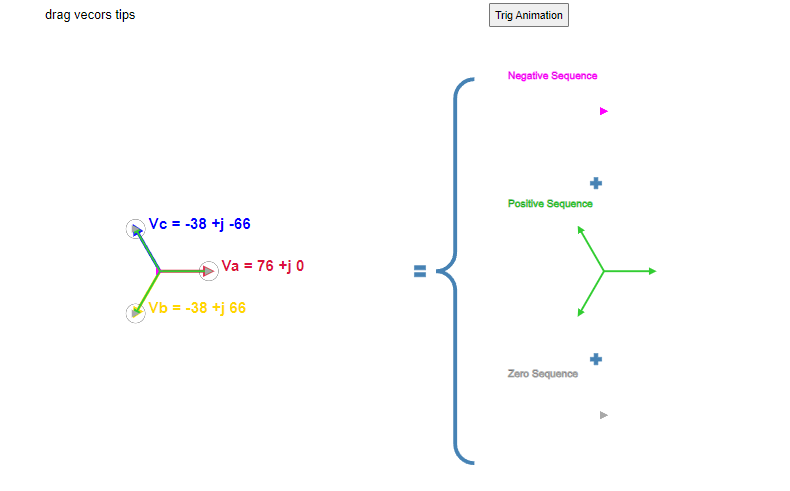
Explore symmetrical components through an interactive visual model of positive, negative, and zero sequence quantities. Relate unbalanced system conditions to sequence components.
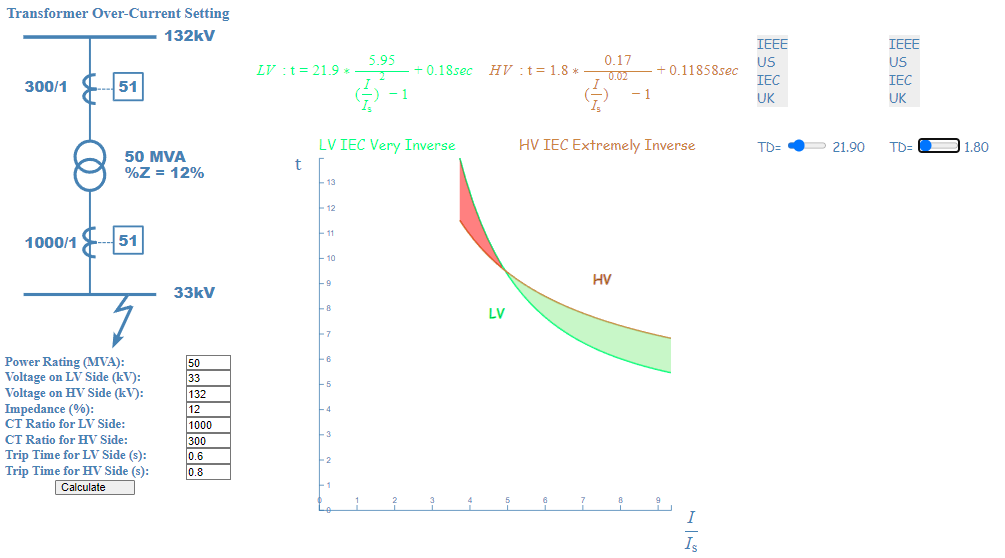
Work through transformer overcurrent setting decisions with practical pickup and timing considerations. Set transformer overcurrent protection with clear pickup and time grading logic.
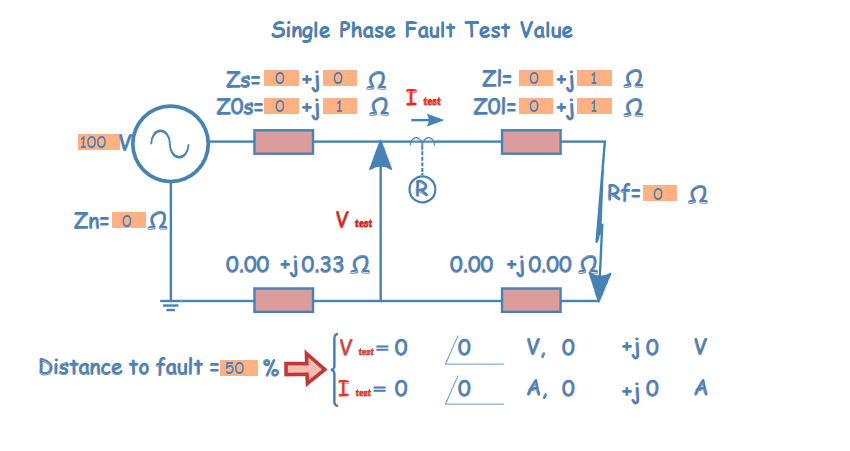
Practice fault current calculations for common phase-to-ground, phase-to-phase, and three-phase cases. Estimate short-circuit quantities used in relay setting and study work.
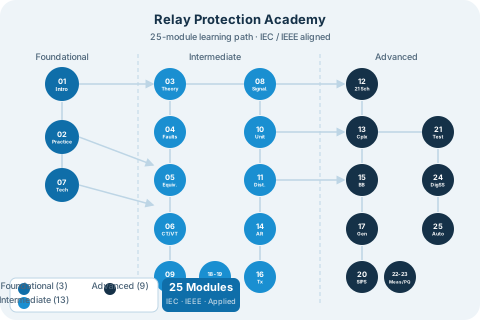
A structured learning path from protection fundamentals to advanced topics. Modules 01 to 10 are live. All 25 ship progressively.
Why protection exists, what it must achieve, and how the main protection functions are structured. The starting point for the full course track.
Protection selectivity, sensitivity, speed, and reliability in practice. How these four requirements shape every relay setting decision.
Phasors, symmetrical components, and the per-unit system. The mathematical foundations that underlie every protection calculation in the course.
Symmetrical and asymmetrical fault analysis using sequence networks. Derive fault currents for three-phase, single-line-to-earth, and inter-phase faults.
Machine reactances, transformer zero-sequence circuits, and overhead line impedances. The plant models that feed every protection study.
CT and VT accuracy classes, knee-point voltage, transient factor, burden calculations, and non-conventional instrument transformers.
Four generations of relay design, numerical relay architecture, Nyquist sampling, DFT phasor estimation, and disturbance recording.
Direct, permissive and blocking teleprotection schemes. Security vs dependability trade-offs, PLCC, optical fibre, and fault clearance time budgets.
IEC IDMT characteristics, grading margin calculations, directional elements, ring main open-point method, CBCT earth-fault, and Petersen coil networks.
Merz-Price differential principle, dual-slope percentage bias, digital time synchronisation, vector group compensation, and phase comparison schemes.